
Custom Millwork for Open Kitchen Concepts: Design & Compliance Guide
Custom millwork transforms open kitchens into efficient, visually appealing spaces while meeting Ontario’s strict health and safety regulations. This guide covers essential design principles, material selection, and compliance considerations for restaurant owners and designers. Here’s what you need to know:
- Design Priorities: Open kitchens must balance workflow, customer visibility, and durability. Custom millwork helps define zones (prep, cooking, plating) while maintaining a polished look.
- Material Choices: Use durable, non-porous materials like stainless steel, quartz, and marine-grade plywood to handle heat, moisture, and heavy use.
- Compliance: Ontario regulations require seamless, non-absorbent surfaces, proper ventilation, and dedicated handwashing stations.
- Cost Factors: Custom millwork costs range from $500–$2,000+ per linear foot, influenced by materials, complexity, and regulatory requirements.
- Customer Experience: Integrated lighting, cohesive finishes, and well-planned service counters enhance both functionality and aesthetics.
Investing in custom millwork ensures your open kitchen meets operational and regulatory needs while creating a memorable dining experience for guests.
What Is an Open Kitchen Concept in Commercial Spaces?
An open kitchen concept eliminates the traditional barriers – like walls, doors, and solid partitions – that separate the kitchen from the dining area, creating a more interactive and transparent dining experience. This design turns the kitchen into a "culinary theatre", where guests can watch chefs in action, building trust by showcasing food-handling practices and hygiene standards. Markie Plunkett, Designer and Owner at Timber+Plumb, highlights one benefit of this setup: "appliances can fit much better with more space for door swings". Additionally, this layout encourages direct interaction between chefs and diners, making the meal more engaging and memorable.
However, open kitchens come with their own set of challenges. Noise from pots, pans, and equipment can disrupt the dining atmosphere without walls to contain it. Cooking odours, steam, and heat can also drift into the dining area, requiring advanced ventilation systems to maintain comfort. Staff must keep the kitchen "show-ready" at all times, ensuring cleanliness and order under the constant gaze of diners.
To make these spaces function smoothly, successful open kitchen designs carefully define zones for essential tasks such as receiving, prep work, cooking, plating, and dishwashing. This approach reduces the risk of cross-contamination while maintaining efficiency. The layout must also balance operational needs with visual appeal, often incorporating polished surfaces, custom millwork, and thoughtful arrangements to ensure the space is both functional and visually striking. Some restaurants have reported a 20% increase in repeat customers within six months of adopting this format.
Every element in an open kitchen, from countertops to cabinetry, must be made from durable, commercial-grade materials. These materials not only withstand high heat and moisture but also contribute to the restaurant’s overall aesthetic. Custom millwork is particularly important in blending practicality with a sophisticated design, addressing the unique demands of this concept.
sbb-itb-cb01839
Why Custom Millwork Is Essential for Open Kitchen Design
Custom millwork serves as both a practical and aesthetic solution, seamlessly connecting kitchen and dining areas in open-concept spaces – something standard cabinetry often falls short of achieving. In these designs, every element – cabinets, counters, storage – remains in plain sight, meaning millwork must balance functionality with visual appeal. As Alliance Millwork puts it:
Well-executed custom restaurant millwork allows operators to translate the idea of the restaurant into a physical environment that feels cohesive, intuitive, and inviting.
This combination of practicality and design enhances both workflow and the customer experience.
One major advantage of custom cabinetry is its ability to increase usable storage by up to 30% compared to pre-made options. This ensures that staff have quick access to essentials, improving efficiency and reducing delays during busy periods. Thoughtful design, including precise clearance and circulation planning, helps avoid bottlenecks in high-traffic areas.
Durability is another critical factor. Open kitchens are always on display, so the millwork must endure heavy daily use, frequent cleaning with industrial-strength products, and exposure to heat and moisture. Using materials like solid hardwood with moisture-resistant finishes, reinforced shelving, and premium hardware – such as dovetail joints and soft-close mechanisms – ensures the space remains both functional and visually appealing over time.
Custom millwork also plays a role in maximizing revenue by making the most of every square metre. Tailored designs can create multi-functional zones, like islands that double as prep areas and service stations, while built-in storage keeps high-visibility areas tidy. This efficient use of space can directly boost a commercial kitchen’s earning potential.
Finally, custom millwork delivers a level of visual harmony that standard solutions can’t match. By using consistent materials, colours, and finishes across both the kitchen and dining areas, it creates a unified look that reinforces the brand’s identity. This cohesive design elevates the open kitchen from merely functional to an integral part of the dining experience, blending operational efficiency with aesthetic appeal. Together, these elements set the stage for further exploration of key design principles.
Key Design Considerations for Open Kitchen Millwork
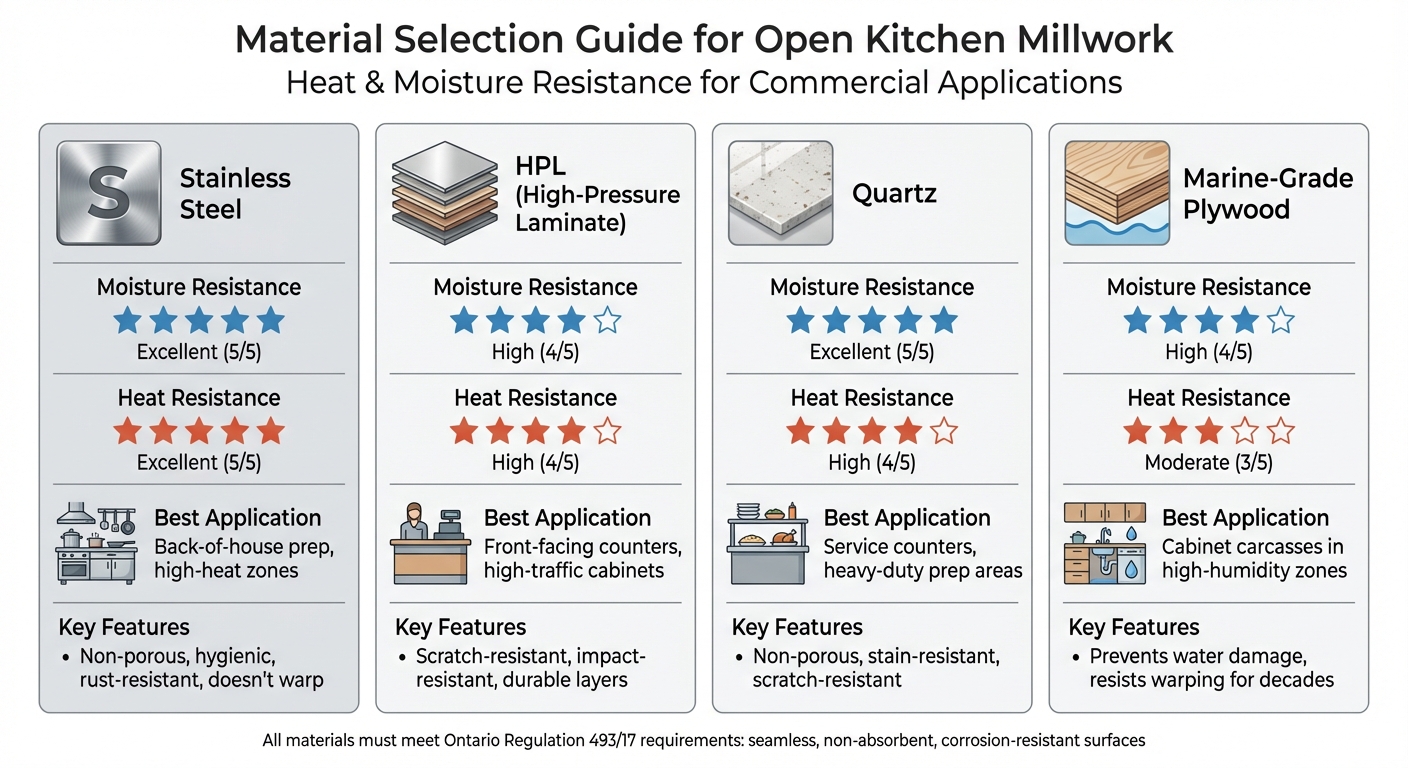
Commercial Kitchen Materials Comparison: Heat and Moisture Resistance Guide
Designing millwork for open kitchens means juggling three main goals: smooth operations, attractive design, and durable materials. Unlike closed kitchens, everything is on display, so the millwork needs to work flawlessly while also looking polished and intentional. This requires thoughtful planning to align workflow, aesthetics, and material choices right from the start.
Workflow and Back-of-House Efficiency
Custom millwork helps organize open kitchens into six distinct zones: dish return, washing, storage, preparation, cooking, and plating. Separating these areas reduces the chances of cross-contamination and keeps the kitchen running smoothly during busy service hours. Another key principle is the three-stream separation, which creates separate pathways for staff, supplies, and waste. This setup minimizes congestion and helps maintain cleanliness in high-traffic areas.
Multi-functional workstations are a game-changer. Features like built-in cutting boards, pull-out workspaces, and strategically placed storage compartments ensure everything is within reach. Custom cabinetry for service stations, host areas, and bars keeps tools and supplies exactly where they’re needed. In open kitchens, clever solutions like built-in niches and specialized shelving hide bulky equipment while keeping everything accessible. This combination of efficiency and tidiness ensures the open kitchen remains both functional and visually appealing to guests.
Customer Visibility and Aesthetic Integration
Kitchen islands often act as the dividing line between the kitchen and dining areas, creating a functional boundary while maintaining an open feel. To make the kitchen blend seamlessly with the dining space, millwork should feature matching colours, finishes, and hardware throughout both areas. This creates a cohesive look, making the kitchen feel like an intentional part of the dining experience rather than a separate workspace.
Glass-front cabinets and partitions are excellent for maintaining an open, light-filled design while still providing a physical barrier between the kitchen and dining areas. Using two-tone cabinetry – lighter shades for upper cabinets and darker ones for lower units – adds a sense of balance and openness. With the kitchen fully visible, concealed storage solutions like pull-out shelves and appliance garages become essential. These features keep clutter out of sight, ensuring a smooth transition between the functional kitchen and the decorative dining space.
Material Selection for High-Heat and High-Moisture Areas
In open kitchens, choosing the right materials is critical to handle the high heat and moisture levels. Stainless steel is the top choice for commercial kitchens due to its unmatched resistance to heat, water, rust, and corrosion. It’s non-porous, hygienic, and doesn’t warp with temperature changes.
High-Pressure Laminate (HPL) is another strong option. Made from layers of paper and resin fused under high pressure, it’s highly resistant to scratches, impact, heat, and moisture. For cabinet carcasses in humid areas, marine-grade plywood is a smart pick. It prevents water damage and resists warping for decades. For surfaces like service counters and prep areas, quartz stands out because it’s non-porous and resists stains, scratches, and heat.
To protect cabinetry, all exposed edges of plywood or MDF should be sealed with edge banding to prevent moisture from seeping in. Adding ventilation features like exhaust fans or slats can also help prevent mould by improving airflow.
| Material | Moisture Resistance | Heat Resistance | Best Commercial Application |
|---|---|---|---|
| Stainless Steel | Excellent | Excellent | Back-of-house prep, high-heat zones |
| HPL (Laminate) | High | High | Front-facing counters, high-traffic cabinets |
| Quartz | Excellent | High | Service counters, heavy-duty prep areas |
| Marine Plywood | High | Moderate | Cabinet carcasses in high-humidity zones |
The right materials set the stage for advanced design elements, which will be explored in the next sections.
Health and Safety Regulations in Ontario
In Ontario, strict health and safety regulations ensure that food premises use materials and designs that promote hygiene and durability. Under Ontario Regulation 493/17: Food Premises, part of the Health Protection and Promotion Act, all areas where food is handled must meet specific structural and maintenance standards. This includes using seamless, non-absorbent surfaces and avoiding porous materials. Additionally, all millwork and equipment must be corrosion-resistant, non-toxic, and free of cracks or open seams to prevent contamination. For areas with high moisture or food preparation, materials like stainless steel, fiberglass reinforced plastic (FRP), or ceramic tiles are advised for their ease of cleaning and durability.
For open kitchen concepts or customer-facing displays, sneeze guards should be incorporated into the millwork to protect food. Food storage must also comply with the rule of keeping items at least 15 cm off the floor on cleanable racks or shelves. Chemicals, meanwhile, need to be stored in designated areas, far from food contact surfaces to avoid cross-contamination.
Other essential design considerations include installing separate handwashing stations in all food prep areas. These stations must have hot and cold potable water under pressure, liquid soap, and paper towel dispensers. Ventilation systems, such as canopies and filters, are also critical to remove odours, fumes, smoke, vapours, and excessive heat efficiently. Before starting any millwork project, owners are required to notify their local Health Unit during construction and before reopening after renovations. Additionally, consultation with municipal Building and Fire Departments is necessary when installing grease traps or ventilation hoods to ensure proper installation and compliance with clearance requirements.
Custom Service Counters and Front-Facing Elements
The service counter is more than a workspace – it’s the heart of your kitchen’s interaction with customers. In open kitchen layouts, these counters are part of the dining experience, offering a front-row seat to the action. Customers can watch meals being prepared, plated, and passed through, making these elements both functional and visually engaging. This dual role highlights the importance of combining efficiency with aesthetic appeal.
Choosing the right materials is key to ensuring durability and easy maintenance. Quartz and stainless steel are top choices for high-traffic areas. Quartz resists stains and scratches while being non-porous, making it easy to clean. Stainless steel, on the other hand, offers a sleek, modern vibe and handles frequent sanitization well, though it can show fingerprints. For a warmer touch, solid hardwoods like maple or walnut are excellent, but they need moisture-resistant treatments to avoid warping over time.
"Restaurants are high-traffic environments, which is why professional restaurant millwork Toronto focuses on materials and construction methods that are resistant to moisture, wear, and frequent cleaning."
When designing counters, spacing is critical for smooth operations. Allow at least 107 cm of clearance for a single cook and 122 cm for multiple staff members. Primary prep areas should measure 91 cm by 61 cm. Custom millwork costs can vary widely, typically ranging from $500 to $2,000+ per linear foot, depending on the complexity of the design.
Every front-facing element contributes to the overall customer experience in its own unique way.
Open Kitchen Pass-Through Design
Pass-through counters are the bridge between the kitchen and dining area, facilitating both workflow and interaction. Their dimensions – height, depth, and surface material – affect how efficiently staff can transfer dishes while maintaining eye contact with diners. Standard heights for pass-throughs range from 91 to 107 cm (36 to 42 inches), offering a comfortable level for servers to pick up orders without unnecessary bending.
Durability is non-negotiable in these high-use areas. Materials like quartz and other solid surfaces are ideal – they resist chipping and cracking, handle the impact of plates and trays, and are non-porous for easy cleaning. Rounded edges not only enhance safety but also help reduce wear over time.
Integrated lighting is another smart addition, improving visibility for both kitchen staff and servers. This ensures plated dishes are presented perfectly, meeting quality and aesthetic standards.
At Quantum Coffee in Brainstation, Toronto, the pass-through design featured a striking origami-inspired aesthetic, complemented by a 30-foot ceiling and custom millwork. This cohesive design created a seamless flow in a bustling, high-traffic space.
Integrated POS and Display Areas
Point-of-sale (POS) stations and display areas require thoughtful design that balances technology with branding. Custom millwork can include built-in cable management to keep cords and terminals organized and out of sight while remaining accessible for staff. Storage compartments for essentials like receipt paper, cleaning tools, and small supplies help maintain a clutter-free workspace.
Planning for future growth is also essential. A 20% buffer for potential technology upgrades or menu expansions ensures the space remains functional over time. Counter depths of 61 to 76 cm (24 to 30 inches) provide enough room for transactions and merchandising. Integrated LED lighting can further enhance display areas, drawing attention to fresh ingredients or signature menu items.
At Odin Café on King Street West, Toronto, custom fixtures were designed in collaboration with Phaedrus Studio and W Wolfe Homes. Their geometric interior design seamlessly aligned with the café’s architectural layout, improving both customer experience and operational flow.
Protective Glass and Food Shields
Protective barriers, like sneeze guards, are a must for food displays in customer-facing areas. These shields should blend seamlessly into the counter’s design. Glass panels with a minimum thickness of 6 mm (¼ inch) ensure durability, while frameless designs maintain a modern, open look. Additionally, mounting systems should allow for easy removal during deep cleaning without compromising stability.
Halo Brewery on Wallace Avenue in Toronto integrated these protective features into their custom millwork without sacrificing style. Their design combined darkened timber, geometric patterns, and acid-etched metal accents, proving that functional safety elements can also enhance the overall atmosphere.
Lighting Integration in Open Kitchen Environments
Lighting in an open kitchen serves more than just a functional purpose – it helps define spaces, enhances safety, and creates the right atmosphere for diners. Custom millwork can be tailored to support a layered lighting strategy that blends ambient, task, and accent lighting. This approach not only ensures proper visibility but also preserves the clean, professional look that open kitchens are known for.
Under-cabinet LED strips are a great choice for task lighting. They provide focused illumination on countertops, eliminating shadows caused by overhead lights. Millwork with built-in wiring and recessed areas can hide these fixtures when they’re not in use. Todd Brown from CabinetCorp emphasizes their versatility: "Under-cabinet lighting illuminates kitchen countertops for task lighting, highlights items, and adds ambiance to glass-front cabinets". For the best results, position LED strips 3 to 8 cm from the cabinet’s front edge to reduce glare.
"Under-cabinet lighting is one of the most functional upgrades you can make. It lights up your worktops directly, reduces shadows from overhead lighting and adds a sleek, professional finish to the kitchen." – Galley Kitchens
Toe-kick lighting, placed in the recessed area beneath base cabinets, creates a floating effect and improves safety along walkways. For accent lighting, consider installing LED strips inside glass-front cabinets to showcase glassware or ingredients. Pendant lights over islands or pass-throughs should hang 76 to 91 cm (30 to 36 inches) above the counter to maintain clear sightlines between staff and diners. In areas prone to moisture, choose Damp Listed or ETL Listed fixtures for durability. Pricing for LED flush mount fixtures typically ranges from $15.00 to $70.00, while 4-foot wraparound models can cost between $40.00 and $230.00.
To achieve a polished look, plan lighting and wiring early to keep cables hidden. Stick to consistent colour temperatures – warm white (2700K–3000K) for a cosy ambiance and cool white (3500K–4000K) for task-oriented areas. Adding dimmer switches to each lighting layer allows you to seamlessly transition from bright food preparation to a more relaxed dining vibe. These thoughtful lighting solutions work hand-in-hand with custom millwork to create a functional and inviting open kitchen.
Common Mistakes in Open Kitchen Millwork Projects
Choosing the wrong materials can derail even the most promising open kitchen projects. For instance, high-gloss finishes may look sleek and modern, but in busy commercial settings, they quickly become a magnet for fingerprints and smudges, creating a maintenance headache. Similarly, porous natural stones used for countertops near sinks or stoves are prone to permanent staining from oils and detergents. As Taylor Shafer from Woodworker Express aptly points out:
"Workflow matters more than square footage. Even small kitchens feel large when the layout works".
Unfortunately, many businesses focus too much on aesthetics, prioritizing decorative cabinetry with limited functionality over durable designs that can handle the rigours of daily use.
Poor layout planning is another common issue that can wreak havoc on workflow. For example, failing to properly organize traffic and pickup zones often leads to congestion, staff collisions, and customer frustration during peak hours. Delivery drivers crowding dining spaces and employees bumping into each other during rush periods are signs of a poorly thought-out design. In open kitchen concepts, neglecting to establish distinct zones for prep, cooking, and plating often results in employees stepping on each other’s toes – literally and figuratively. Beyond operational inefficiencies, these errors can make it harder to meet compliance standards.
Speaking of compliance, regulatory oversights in Ontario can be particularly costly. For example, using recirculating hood fans instead of venting directly outdoors with rigid metal ducting violates local standards. Another frequent mistake is skipping dedicated handwashing stations. Ontario Regulation 493/17 requires these stations to be separate from food prep sinks and equipped with hot and cold running water, soap dispensers, and single-use towels. Rich Home Inc. underscores the importance of fire safety regulations:
"The kitchen is statistically the most likely place for a fire to start, so the separation between the basement kitchen and the upstairs living area must be robust".
Failing to use 5/8″ Type X fire-rated drywall for a 45-minute fire separation can lead to compliance notices or, worse, forced teardowns.
Environmental factors are another area often overlooked during the design phase. High heat and moisture levels in certain areas can cause materials to degrade prematurely if they aren’t accounted for. Additionally, some wood species, like cherry, naturally darken over time, and ignoring this aging process can lead to noticeable colour mismatches. Choosing materials that can’t withstand frequent cleaning and sanitizing is another critical error, especially since Ontario regulations require surfaces in food prep areas to be smooth, non-absorbent, and corrosion-resistant.
A lack of harmony between custom millwork and surrounding design elements can also hurt the overall aesthetic of an open kitchen. Mismatched materials or colours between the kitchen and dining areas create a visual disconnect, which can negatively affect customer perceptions of quality and attention to detail. Kitchen Design NYC highlights this point:
"In open kitchen layouts, you must consider surrounding areas. Make sure to create a seamless flow and harmonious design".
Using visual planning tools like 3D rendering during the design phase can help avoid these issues. By allowing designers to see how different finishes and materials work together before fabrication, 3D renderings ensure a unified design and help prevent costly, last-minute mistakes.
Cost Factors for Custom Open Kitchen Millwork in Canada
When planning a custom open kitchen millwork project in Canada, understanding what drives costs is crucial for both budgeting and meeting Ontario’s compliance standards. One of the biggest factors? Material selection. Custom cabinetry prices range from $400 to $2,000 per linear foot depending on whether you opt for laminate, wood veneer, or solid hardwoods like oak, maple, or cherry. The materials you choose directly affect the overall cost, but that’s just the beginning.
Design complexity plays a major role, too. The more intricate the design, the higher the costs for both materials and labour. Features like integrated appliances, fluted panels, arched cabinet doors, and built-in lighting can quickly add up. For full custom millwork, expect to spend between $20,000 and $50,000, with luxury renovations sometimes surpassing $160,000. As OakWood explains:
The true cost of a kitchen renovation is determined by your home’s existing conditions, design complexity, and desired finishes.
Structural modifications are another key expense, particularly for open-concept designs. Removing load-bearing walls or re-routing utilities can significantly increase costs. Older homes often need updates to electrical and plumbing systems to meet modern codes, adding thousands more to the budget.
Regulatory compliance in Ontario is also a cost driver. The 13% Harmonized Sales Tax (HST) applies to almost all renovation expenses, including labour and materials. Permit fees vary depending on the municipality. For example, Hamilton charges a minimum building permit fee of $277.00, plus an applicable law review fee of $272.00. Projects requiring stamped BCIN drawings or engineer approval can add at least $5,000 to the design phase. Additional requirements, like health department reviews, grease interceptor installations, and accessibility compliance under AODA, can further increase costs.
Finally, site preparation adds both time and money to the project. Renovations often involve demolition, wall reinforcement, and levelling uneven surfaces to ensure cabinetry fits perfectly. These steps, combined with the need to coordinate multiple trades, can extend timelines and add thousands to labour costs. During peak construction seasons, contractor availability tightens, which can drive prices even higher.
From Design to Installation: How the Process Works
Creating custom millwork for an open kitchen starts with a personalized consultation. In this phase, designers work closely with restaurant owners to outline functional zones – like preparation, cooking, cleaning, storage, and serving – while also discussing the overall look, budget, and specific operational requirements. This process typically takes 1–2 weeks and serves as the foundation for the entire project.
Accurate on-site measurements are critical when crafting high-quality custom cabinetry. These measurements account for any irregularities, such as uneven walls or floors, ensuring a perfect fit. After this, designers produce 3D renderings and technical drawings, allowing clients to visualize the final design. These plans include dimensions, material options, and hardware details, which clients review and approve. This design phase generally takes 2–4 weeks.
Once the design is locked in, the manufacturing process begins at Alliance Millwork’s Vaughan facility. Using advanced CNC technology and strict quality control, every piece is precisely crafted in a controlled workshop environment. This stage, which typically lasts 4–8 weeks, eliminates dust and noise at the restaurant, keeping disruptions to a minimum.
The final step is installation, which usually takes 1–5 days depending on the complexity of the project. Professional installers ensure everything is level and secure, often using scribing techniques to achieve a perfect fit against uneven surfaces. The team works efficiently to minimize any interference with the restaurant’s daily operations. A final walkthrough is conducted to confirm that all components function properly, and clients receive maintenance tips tailored to their specific finishes and hardware. Impressively, over 80% of clients return for future projects, a testament to the quality and attention to detail that defines this process. This seamless workflow not only delivers exceptional results but also helps set restaurants up for long-term success.
When Custom Millwork Is the Right Investment for Restaurants
Taking into account the design and cost considerations previously discussed, it’s essential to evaluate your restaurant’s specific needs before committing to custom millwork. Not every establishment will see a strong return on this investment, but for certain types of restaurants, the benefits can be substantial. Upscale and luxury venues, in particular, gain the most when they need to balance stunning aesthetics with practical functionality. These businesses rely on unique design elements that generic, off-the-shelf options simply can’t provide. Custom millwork becomes a critical tool in creating the sophisticated atmosphere that guests expect and that aligns with the brand’s identity.
Beyond aesthetics, high-traffic restaurants face their own set of challenges. For establishments serving hundreds of patrons daily, materials like solid wood, premium laminate, or stone are essential to withstand constant wear and tear. Custom layouts designed with efficiency in mind can speed up service during peak hours, directly increasing revenue. In these cases, the investment often pays off within just a few years, thanks to the durability and streamlined operations custom millwork provides.
Urban restaurants often deal with another issue: awkward spaces. Cramped kitchens, irregular walls, or tight corners can make standard cabinetry impractical. Custom millwork addresses these challenges by maximizing every square metre, using vertical storage solutions, compact designs, and pieces tailored to fit precisely. For instance, a downtown Toronto restaurant featured by Commercial Kitchen Build revamped its small kitchen with custom millwork. The result? Faster service, improved ventilation, and glowing customer reviews.
Specialized culinary concepts also benefit greatly from custom millwork. Kitchens equipped with high-heat wok stations, wood-fired ovens, or dedicated baking areas require designs that accommodate specific equipment and cooking methods. Generic solutions often lead to inefficient layouts or even safety concerns. Tailored millwork not only meets these unique needs but also enhances overall efficiency, saving costs in the long run.
While the upfront cost of custom millwork can range from $500–$800 to $1,200–$2,000 per linear foot, the long-term benefits make it a worthwhile investment. Its durability and ability to improve workflow are particularly valuable for restaurants where the kitchen plays a key role in both guest experience and brand perception.
When carefully aligned with a restaurant’s design and operational needs, custom millwork ensures a seamless and efficient kitchen layout. Companies like Alliance Millwork specialize in creating tailored solutions that deliver durability, precision, and operational efficiency over the long term.
Conclusion
Custom millwork in open kitchens strikes a balance between functionality, visual appeal, and meeting regulatory standards, creating spaces that serve both staff and guests effectively. This guide highlights how thoughtful design can transform a commercial kitchen into an efficient, high-performing extension of your dining area.
Every design choice serves a purpose. Custom service counters and pass-throughs enhance workflow while showcasing the artistry of the kitchen. Durable materials handle the rigours of daily use without losing their charm, while integrated lighting adds ambience and ensures precision. These elements work together to foster trust through transparency and drive profitability through efficiency.
Adhering to Ontario’s health and safety standards is non-negotiable. Features like properly installed transparent sneeze guards and ventilation systems that manage odours and steam are key considerations. Engaging with building, fire, and health authorities early in the process helps ensure compliance and avoids expensive last-minute changes.
Investing in custom millwork can account for 35–40% of a renovation budget, but the returns can be substantial. For example, one urban bistro saw a 20% increase in repeat customers within six months of implementing these upgrades. By combining thoughtful design with operational efficiency, open kitchens can elevate the dining experience in meaningful ways.
Alliance Millwork specializes in crafting solutions that address the challenges of open kitchens, delivering durability, precision, and efficiency that stand the test of time.
FAQs
What approvals do I need before renovating an open kitchen in Ontario?
Before starting renovations on an open kitchen in Ontario, it’s essential to secure a building permit from your local municipality. This is particularly crucial if your project involves structural modifications, plumbing, electrical work, or ventilation upgrades. These steps ensure your renovation complies with the Ontario Building Code and local regulations. Always consult your local authorities to verify the specific requirements for your plans.
How do I reduce noise and odours in an open kitchen?
To keep noise and odours in check in an open kitchen, opt for sturdy materials that can handle heat and moisture. These materials help contain odours while also reducing sound levels. Incorporating a high-quality ventilation system is essential for managing odours effectively. To tackle noise, consider adding acoustic treatments, such as sound-absorbing panels, which can be seamlessly integrated into the kitchen’s design and millwork. Together, these features create a more pleasant and functional open kitchen space.
How long does custom millwork usually take from design to install?
Custom millwork typically requires 4 to 8 weeks from the initial design phase to the final installation. However, the timeline can shift depending on factors like how complex the project is or how quickly materials can be sourced. For more elaborate or detailed designs, you might need to allow extra time to ensure everything is crafted with the highest level of care and precision.