

8 Storage Solutions for Multi-Unit Residential Projects
Living in condos or apartments often means working with limited space. Smart storage solutions can transform tight areas into functional, organized, and visually appealing spaces. Developers and residents alike benefit from these designs, which maximize every centimetre without sacrificing style. Here’s a quick rundown of the top storage ideas for multi-unit homes:
- Custom Modular Kitchen Cabinets: Maximize vertical space with floor-to-ceiling units, corner carousels, and sleek designs.
- Built-In Closet Systems: Floor-to-ceiling designs with adjustable shelving and motion-sensor lighting.
- Space-Saving Bathroom Vanities: Floating vanities and narrow-depth options for tight layouts.
- Under-Stair Storage: Custom millwork for deep drawers or shelves in unused triangular spaces.
- Wall-Mounted Fold-Down Desks: Hidden workspaces with built-in outlets and lighting.
- Entryway Bench and Shoe Storage: Multi-functional units for seating and storage in narrow hallways.
- Laundry Room Pull-Out Cabinets: Tilt-out hampers, pull-out shelves, and integrated ironing boards.
- Balcony Storage Planters: Combine greenery with hidden compartments for tools and cushions.
These solutions not only improve organization but also add functionality and appeal to urban living spaces.
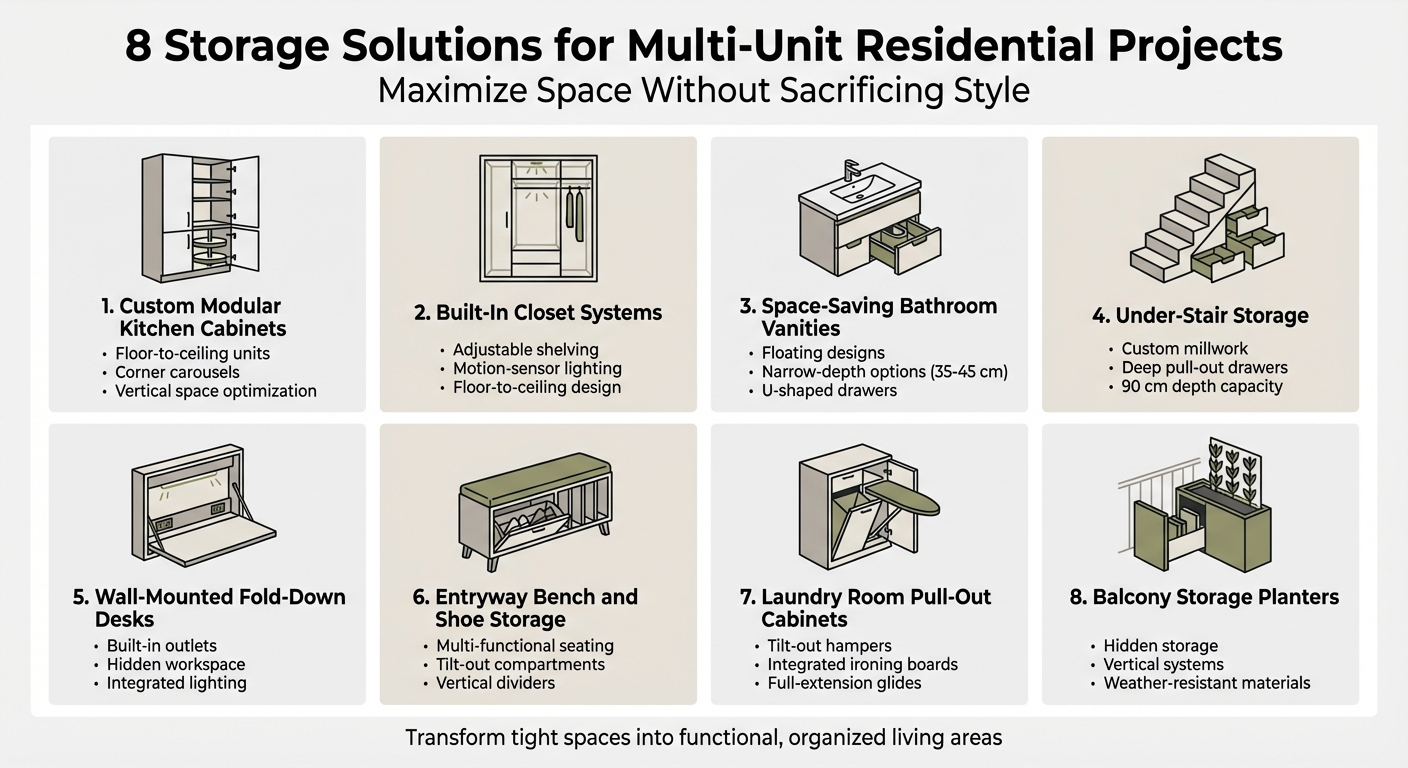
8 Smart Storage Solutions for Multi-Unit Residential Buildings
1. Custom Modular Kitchen Cabinets
Space Optimization
Kitchens in condos and apartments often face a tough challenge: fitting cookware, appliances, pantry items, and cleaning supplies into a limited area. Modular cabinets solve this issue by making use of every centimetre, especially vertical space that often goes unused. For example, floor-to-ceiling pantry units can nearly double storage capacity without taking up extra floor area. Items you don’t use daily can be stored higher, leaving essentials within easy reach.
Corner cabinets are another tricky spot. They often turn into hard-to-reach spaces where items get lost. But with features like corner carousels, lazy Susans, and diagonal drawers, these awkward areas can become practical storage spaces for heavy pots or small appliances. Even the 10-cm toe-kick at the base of cabinets can be repurposed into shallow drawers for baking sheets, cutting boards, or step stools.
These clever designs don’t just save space – they also set the foundation for a more efficient and organized kitchen.
Functionality
Beyond saving space, a modular kitchen is designed for smooth workflow. The classic "work triangle" layout – keeping the sink, stove, and refrigerator between 1.2 and 2.4 metres apart – minimizes unnecessary movement during cooking. Features like pull-out pantry organizers and deep drawers with full-extension glides (such as BLUM® systems) make it easy to grab items at the back without awkward bending or digging.
Aesthetic Appeal
In smaller urban spaces, visual clutter can make a kitchen feel cramped. Modern modular designs address this with handleless or push-to-open cabinets and sleek slab-front doors, creating a clean and streamlined look. Popular finishes for 2025 include matte tones like olive, beige, and grey, which bring a calming vibe that appeals to renters and buyers alike.
Scalability Across Units
For developers and property managers, modular cabinets are a smart investment. Manufactured in standard sizes, they help cut costs and speed up installations across multiple units. Modular components are also easy to replace or update, offering long-term flexibility. Sticking to a consistent palette of finishes and hardware across units simplifies maintenance while still allowing configurations to adapt to different layouts.
10 Smart Vertical Storage Solutions
1. Built-In Closet Systems
After tackling efficient kitchen solutions, built-in closets take the spotlight for turning small spaces into organized, functional areas.
Space Optimization
Closets in condos and apartments often feel tight, but built-in systems make the most of every inch. Designed to fit exact dimensions, these systems use floor-to-ceiling designs, maximizing vertical storage. Features like sliding or mirrored doors save precious floor space and create the illusion of a larger room.
For smaller bedrooms, reach-in closets are a smart choice. They use horizontal and vertical space effectively with custom shelving and hanging rods. Plus, their shallow depth means no extra room is needed to step inside.
Functionality
A thoughtfully designed closet streamlines daily life. Built-in systems create dedicated zones for hanging clothes, folded items, shoes, and accessories, keeping everything visible and easy to access. Features like adjustable shelving and modular racks make it simple to reconfigure the layout as needs evolve – whether it’s adding space for suits or creating more room for sweaters.
Modern additions like motion-sensor LED lighting enhance visibility, especially in deep or dimly lit closets. Pull-out drawers with full-extension slides make retrieving items from the back effortless. Some systems even include extras like built-in charging stations or foldable ironing boards, adding convenience without taking up additional space. These functional touches not only improve organization but also elevate the overall look of the room.
Aesthetic Appeal
Built-in closets integrate seamlessly with the room’s design, offering a clean and polished appearance. Slab-front doors in neutral shades like white, grey, or beige align with minimalist trends, helping small spaces feel open and uncluttered. Mirrored doors, in particular, reflect light and visually expand compact rooms, all while eliminating the need for door clearance.
Scalability Across Units
For developers managing multiple units, built-in closets provide practical and cost-effective benefits. Using standardized materials like moisture-resistant laminates or MDF ensures a consistent look across units while keeping expenses in check. Bulk purchasing and simplified installation processes help save both time and money. High-quality hardware – such as soft-close hinges and durable drawer slides – reduces maintenance needs, making these systems ideal for high-turnover rental properties. Built-in closets, much like other integrated solutions, highlight the importance of tailored design in multi-unit developments.
2. Space-Saving Bathroom Vanities
Multi-unit bathrooms often come with challenges like tight layouts, awkward corners, and limited floor space. Space-saving vanities tackle these issues while blending practicality with style.
Space Optimization
Floating vanities are a game-changer for small bathrooms. By freeing up floor space, they create a sense of openness and make cleaning much easier. Unlike bulky freestanding units, they reveal more of the floor, giving the illusion of a larger room.
Narrow-depth vanities, typically 35–45 cm deep, work well in compact spaces without obstructing movement. For tricky corners or unused wall areas, vertical storage towers or corner-specific vanities turn underutilized spots into practical storage zones. These designs make it easier to store essentials like linens and toiletries within arm’s reach.
Functionality
Modern space-saving vanities are packed with features that maximize every centimetre. Full-extension deep drawers provide easy access to stored items, while thoughtful internal designs keep everything organized. Designer Cynthia Stafford from TruDesign highlights:
"Smaller drawers make us place items with more thought and intention, and with a shallow depth we can’t cram too much in one space."
Innovative features like U-shaped drawers navigate around plumbing, and tiered organizers or adjustable dividers help separate smaller items neatly. Custom cabinetmaker Charlie Henderson from Woodshop QC adds:
"I prefer to shift the sink off centre to allow for a normal-functioning drawer stack on the end, where the drawers can avoid the sink plumbing."
Built-in power outlets inside drawers keep devices like hair dryers and electric toothbrushes plugged in but out of sight, cutting down on countertop clutter. Wall-mounted faucets paired with floating vanities also free up valuable counter space for everyday essentials.
Aesthetic Appeal
Minimalist designs with slab-front, handleless cabinets create a clean, streamlined look. Mirrored fronts not only reflect light to make the room feel brighter but also visually expand the space. Swapping a flat mirror for a shallow mirrored medicine cabinet adds hidden storage without making the room feel crowded.
Light wood finishes, such as grey oak or walnut, bring a touch of warmth to minimalist designs, while bold shades like deep navy or soft sage can act as striking focal points. Modern conveniences like motion-activated LED lighting and anti-fog technology in mirrored cabinets add both style and practicality.
Scalability Across Units
For developers managing multiple units, these vanities are built with moisture-resistant materials like high-pressure laminates, thermofoil, and moisture-resistant MDF. These materials withstand high humidity and frequent cleaning, while mimicking the look of natural stone or wood to deliver a polished aesthetic across all units without breaking the budget.
Prefabricated vanities offer quicker installation and lower costs for large projects, although custom millwork is ideal for irregular layouts. Using reliable hardware like BLUM soft-close hinges ensures durability, even in high-turnover rental properties. Additionally, smooth, non-porous surfaces and integrated sinks cut down on maintenance and help prevent bacteria buildup, making them a practical choice for busy spaces.
3. Under-Stair Storage Solutions
Staircases in multi-unit buildings often create triangular voids that go unused. These spaces, while often overlooked, hold great potential for adding functional storage without requiring any extra square footage. As Alex Mazhukhin, Owner of Mr. Build It, puts it:
"No matter what kind of stairs you have, there will always be an empty cavity underneath. I think it’s a wasted space if you don’t take advantage of it."
Space Optimization
Custom millwork is the key to making the most of under-stair storage. Unlike pre-made units that can leave awkward gaps and unused corners, custom designs are tailored to fit the exact dimensions of the sloped space. Since most staircase cavities extend to about 90 cm in depth, deep pull-out drawers are ideal for accessing the entire area. For added flexibility, wall-mounted shelves with a depth of 25–30 cm (10–12 inches) help maximize storage without limiting accessibility.
Functionality
Once the space is optimized, it’s important to assign it a purpose based on the staircase’s location. For example, stairs near the kitchen can house slide-out pantries for bulk food storage, while those by entryways can be transformed into mudroom lockers complete with shoe storage. Lisa Archilla, an organizer at Bee & Peacock Organizing, emphasizes the importance of intentionality:
"I always recommend that you assign the space a purpose. It can be more than one thing, but it shouldn’t be the place where you stick things because you don’t know where else they should go."
To enhance usability, features like full-extension drawers with heavy-duty under-mount slides, LED lighting, or motion sensors improve accessibility and visibility. Proper ventilation is another must-have to prevent moisture problems .
Aesthetic Appeal
Modern under-stair storage can be designed to seamlessly blend with the surrounding architecture. Touch-latch or push-to-open mechanisms eliminate visible handles, creating a sleek, minimalist look. By matching drawer fronts, paint colours, and trim to the existing staircase, the storage becomes a natural extension of the home. Custom cabinetry can also be finished to complement the overall interior design, ensuring a polished and cohesive appearance.
Scalability Across Units
For developers working on multiple properties, CNC machinery offers precision and consistency for under-stair storage solutions across units. Using moisture-resistant materials like high-pressure laminates or MDF ensures durability in high-traffic areas while keeping costs reasonable. Typical custom under-stair projects range from $2,000 to $10,000, with professional millwork installations in the Toronto and GTA market averaging between $4,000 and $6,500 . These tailored solutions reflect the growing demand for functional and efficient storage in urban homes.
sbb-itb-cb01839
4. Wall-Mounted Fold-Down Desk Cabinets
In today’s compact condos, every square metre matters. With the average new condo in Toronto now measuring just 647 square feet – down from 1,070 square feet for units built between 1981 and 1990 – wall-mounted fold-down desk cabinets have become a smart way to create functional workspaces without taking up precious floor space. These clever units use vertical space, letting you tuck away your home office when it’s not needed, all while maintaining a sleek, uncluttered look.
Space Optimization
Wall-mounted desks keep the floor clear, giving your space an open, modern vibe that can make even the smallest units feel larger. Custom millwork takes this idea further, fitting seamlessly into tight corners and awkward spaces where standard furniture just doesn’t work. As sarang, a Custom Cabinet Specialist, puts it:
"In smaller kitchens [and living areas], every element should serve more than one purpose."
In studio apartments or one-bedroom condos, these desks often pair with Murphy beds or built-in wall systems, doubling up on functionality for both living and sleeping areas. Surrounding the desk with enclosed shelves or cabinets helps hide office supplies, cables, and chargers, keeping the space tidy when the desk is folded away. This design approach not only saves space but also ensures the workspace blends seamlessly into the home.
Functionality
Durability is key, so heavy-duty hinges and reinforced brackets are a must. Many modern designs also include built-in outlets, USB ports, and cable management to keep everything organized and efficient. Adding LED puck lights or under-cabinet lighting above the work surface ensures you have the right illumination for tasks like working or reading.
Proper installation is critical – mounting the desk into wall studs with sturdy hardware ensures stability. High-quality hinges and soft-close mechanisms make these desks reliable for daily use, even in high-density living spaces. As ArtDecor Design Studio highlights:
"Reliable hardware ensures smooth operation and long-term use."
Aesthetic Appeal
Custom millwork allows fold-down desks to integrate seamlessly with the rest of your home’s design, creating a cohesive look. Materials like oak, walnut, metal, or glass can be used for a minimalist finish, or you can opt for bold lacquered colours to make a statement. The exterior of the desk, when folded, can double as a decorative panel, mirror, or even a display shelf.
Placing the desk near a window not only brings in natural light – boosting productivity – but also enhances the workspace’s overall aesthetic. This versatility makes fold-down desks a stylish and practical addition to any compact living space.
Scalability Across Units
For developers, wall-mounted desks offer a practical, scalable option that can be customized for different floor plans while maintaining a consistent design across units. Using moisture-resistant MDF or high-pressure laminates ensures durability, especially in areas like kitchens or laundry zones where exposure to moisture is more likely. Standardized hardware, such as BLUM® hinges and slides, guarantees reliable performance and simplifies maintenance across multiple units.
Custom millwork for these desks typically costs between $820 and $1,880, depending on the materials and level of complexity. While the upfront investment might seem high, these desks add considerable value to properties by meeting the growing demand for functional home office solutions in increasingly compact urban spaces.
5. Entryway Bench and Shoe Storage
Entryway storage solutions are a game-changer for compact spaces, especially in Toronto condos. These multi-functional units combine seating with smart storage, creating a practical "drop zone" that keeps narrow hallways tidy while saving valuable floor space. They not only help manage clutter but also make a great first impression.
Space Optimization
Built-in benches are a clever way to make every centimetre count. By integrating into the architecture, they eliminate the awkward gaps that come with freestanding furniture. Adding hooks and tailored shelving ensures a complete storage solution without crowding the walking area. Slim shoe cabinets with vertical dividers or tilt-out compartments are especially handy for tight urban entryways, offering plenty of storage while maintaining clear pathways.
Floating benches are another smart option, as they keep the floor open and create a more inviting look. Even under-stair spaces or entry niches can be turned into functional storage with custom cabinetry. Alliance Millwork highlights the benefits of this approach:
"Custom millwork is one of the best ways to maximize small spaces because every inch can be used efficiently – from vertical shelving to hidden compartments and multi-purpose units."
These strategies not only save space but also set the tone for a clutter-free and organized entryway.
Functionality
Efficiency is key when it comes to entryway design. Built-in cubbies, pull-out drawers, and lift-up seats make it easy to store shoes, umbrellas, and other daily items. Materials like marine-grade plywood or moisture-resistant MDF ensure durability, while soft-close mechanisms add a touch of convenience. Adjustable shelving provides flexibility for everything from flats to tall boots, making the space functional year-round.
To keep small essentials like keys, mail, and phones organized, dedicated drop zones are a must. Adding under-cabinet LED strips or motion-sensor lights can improve visibility in deep compartments while creating a warm, welcoming atmosphere.
Aesthetic Appeal
Modern entryway designs lean towards minimalism. Handleless doors, push-to-open panels, and slab-front cabinets create a seamless look that blends with the home’s overall style. Matching finishes across cabinetry throughout the unit help maintain a polished, cohesive appearance. Adding decorative cushions or throw pillows to benches introduces a touch of comfort and personality.
Scalability Across Units
For developers, integrated entryway storage is a smart way to boost a unit’s appeal without increasing its size. Custom millwork can be tailored to fit any layout, whether it’s a compact studio or a larger family unit, eliminating the awkward gaps that often come with prefabricated furniture. Using standardized hardware and moisture-resistant finishes ensures consistent quality and makes maintenance easier across multiple units. By addressing the universal challenge of limited storage, these solutions enhance both functionality and market value.
6. Laundry Room Pull-Out Cabinets
In multi-unit buildings, every room needs thoughtful storage solutions, and laundry rooms are no exception. These spaces are often tight, making efficient use of every centimetre crucial. Pull-out cabinets are a smart way to bring items closer for easy access. Slim vertical pull-outs fit snugly between appliances, while rollout shelves handle heavy items like large detergent jugs, saving you from awkwardly reaching into the back of a cabinet. These tailored solutions make laundry rooms in multi-unit living far more practical.
Space Optimization
Floor-to-ceiling pull-out pantry units are perfect for storing seasonal linens or bulk supplies, while toe-kick drawers can discreetly hold flat items like drying racks or cleaning cloths. For under-sink areas, custom pull-out organizers with plumbing cutouts make the most of tricky spaces. Designer Shane Inman highlights the importance of using vertical space:
"Taking advantage of floor-to-ceiling wall space with millwork like louvered cabinetry and pull-out drawers is essential, especially in galley-like laundry rooms."
Organizing pull-out cabinets into zones – like sorting hampers, detergent storage, and ironing stations – further boosts efficiency.
Functionality
Beyond saving space, pull-out systems also improve functionality. Tilt-out hampers allow residents to sort laundry as they go, keeping dirty clothes off the floor and out of sight. Integrated ironing boards and fold-down drying racks disappear when not in use, making the most of small footprints. Ventilated panels or decorative cut-outs in hamper cabinets encourage airflow, reducing moisture build-up from damp clothes. Features like full-extension drawer glides and soft-close hinges ensure these systems are smooth and durable.
Aesthetic Appeal
Modern laundry rooms are leaning toward sleek, minimalist designs that echo high-end kitchen trends. Slab-front cabinets with handleless doors create a streamlined look. Popular finishes include matte tones like soft grey or black, often paired with brushed nickel or matte black hardware for a polished touch. Motion-sensor LED strips inside deep pull-out units enhance visibility and add a hint of luxury. By tucking away bulky items like detergent bottles behind matching cabinetry, the room stays tidy and cohesive, even in open-concept or shared spaces.
Scalability Across Units
For developers, pull-out cabinets provide a standardized solution that works across different unit sizes. Using durable, moisture-resistant materials – like melamine-faced plywood, thermofoil, or high-pressure laminates – ensures these cabinets can handle the heat and humidity of laundry rooms. For a typical small laundry room (about 1.8 m by 2.7 m), custom cabinetry costs range from $8,000 to $18,000, with installation adding another $3,000 to $10,000. Standardized pull-out components help keep costs manageable while offering features like integrated hampers and soft-close mechanisms. This approach ensures consistent quality across multiple units while addressing the common challenge of limited laundry space.
7. Balcony Storage Planters
In many multi-unit buildings, balconies are often the only outdoor space available to residents – and they’re frequently underused. Balcony storage planters bring together greenery and practical storage, turning these small spaces into functional retreats. With urban condos in cities like Toronto averaging just 647 square feet, every centimetre matters. Modern planter designs address this issue by incorporating hidden compartments, vertical systems, and dual-purpose features, blending practicality with style to enhance urban living. This section explores how thoughtful design, multifunctionality, and aesthetic finishes can transform balconies into valuable storage and green spaces.
Space Optimization
Vertical garden systems are a game-changer for small balconies, allowing residents to grow up to three times more plants compared to traditional layouts. Wall-mounted panels and pocket planters draw attention upward, freeing up precious floor space for other uses. Railing-mounted planters also help keep the central area open for furniture or movement, while tall, slender planters can make use of overlooked corners. These systems can support 18–23 kg per square foot, so it’s essential to check your balcony’s weight capacity before installation. Linear planters along the edges can define zones – like a reading area or a compact outdoor kitchenette – without creating clutter.
Functionality
Balcony planters aren’t just decorative; they’re practical too. Many designs include hidden compartments for storing gardening tools, gloves, or even cushions, keeping everything tidy yet within reach. Self-watering reservoirs are another smart feature, cutting down on maintenance and preventing water runoff that might damage building surfaces. For proper root growth, railing-mounted planters should have a depth of at least 15 to 20 centimetres. Amy Gustafson, Vice President at PureModern, highlights their dual purpose:
"Planters offer an efficient, practical, and aesthetically pleasing solution".
Adding locking casters to larger planters makes it easy to rearrange the space or move them for cleaning. Tall plantings can also double as privacy screens and help reduce noise between neighbouring units.
Aesthetic Appeal
Today’s balcony planters are made with durable, weather-resistant materials like powder-coated aluminium, galvanized steel, and recycled plastics (HDPE), ensuring they last while complementing modern architectural styles. High-quality composites, such as Genuine POLYWOOD, often come with warranties of up to 20 years against cracking, rotting, or fading. Layering plants of various heights – ornamental grasses, shrubs, and perennials – within a single deep planter adds visual depth and creates privacy. Trellises can be integrated to support climbing plants, forming "living walls", while modular systems allow for customisation with screens or fencing to enhance the green aesthetic.
Scalability Across Units
For developers, modular planter systems are adaptable to different balcony sizes. Affordable vertical units like the IKEA HYLLIS start at $19.99, and mid-range decorative planters can be found for around $9.99. For larger projects, commercial-grade options in powder-coated aluminium or fibreglass are customisable and priced accordingly. Lightweight modular designs can be scaled to fit terraces ranging from 0.9 x 3 m to 1.2 x 1.8 m, offering consistent quality and functionality while keeping costs manageable. This flexibility ensures that balconies, regardless of size, can be transformed into efficient and stylish outdoor spaces.
Conclusion
Multi-unit residential projects often grapple with the challenge of creating functional, well-organized living spaces within limited square footage. The eight storage solutions discussed here – from custom modular kitchen cabinets to balcony storage planters – tackle this issue by making smart use of vertical space, eliminating wasted areas, and seamlessly integrating storage into the overall design. These approaches transform overlooked spots like corners, entryways, and balconies into practical storage areas without compromising aesthetics.
By partnering with Alliance Millwork, developers can ensure a consistent level of quality and a unified design across all units in a project. Relying on a single provider simplifies the construction process, reduces the hassle of coordinating multiple vendors, and ensures finishes match perfectly throughout the development.
Custom millwork is designed to fit precise dimensions, making the most of every centimetre and avoiding wasted corners or awkward gaps. The solutions outlined here showcase how tailored designs can maximize utility. Alliance Millwork uses top-tier materials, such as solid wood and moisture-resistant MDF, along with BLUM® hinges, to guarantee durability and performance. From design approval to installation, projects are completed in 4–8 weeks, with each installation backed by a five-year warranty for added peace of mind. As Alex Kaucis, CEO of Alliance Millwork, puts it:
"Great interiors begin with great design and thoughtful collaboration".
For developers and property managers, these custom storage solutions not only optimize space but also add value to properties and enhance tenant satisfaction. Tailored storage is often seen as a premium upgrade, boosting resale potential while creating more functional living spaces. Features like moisture-resistant materials in bathrooms and laundry rooms, floor-to-ceiling cabinetry, and clearly defined functional zones deliver both immediate usability and long-term benefits. These integrated solutions streamline construction while improving tenant experience and increasing property value.
FAQs
Which storage upgrades add the most resale value in condos?
Storage upgrades that boost condo resale value often revolve around built-in and integrated solutions. Think custom wall units, built-in closets, or multi-functional furniture with hidden compartments. These additions not only make the space more functional but also appeal to buyers who prioritise efficient layouts in smaller living spaces.
How do I choose moisture-resistant materials for baths and laundry?
When choosing materials for baths and laundry areas, it’s important to prioritise those that can handle high humidity and frequent water exposure. Some excellent options include mineral composites, acrylic solid surfaces, and moisture-resistant laminates. These materials are designed with non-porous or waterproof properties, which help protect against damage and mould. For flooring, consider waterproof options like WPC, which are especially well-suited for Canadian homes where managing moisture is key to ensuring durability and long-lasting performance.
What building rules should I check before adding built-ins or balcony storage?
Before installing built-ins or adding storage to your balcony, it’s essential to check your local building regulations to ensure everything is up to code. Look into rules regarding structural changes, fire safety requirements, and whether permits are needed. These codes are in place to ensure safety and maintain the building’s design consistency. To avoid any issues, consult your local building authority or hire a professional contractor who understands Canadian regulations to confirm what’s permissible before you begin.